


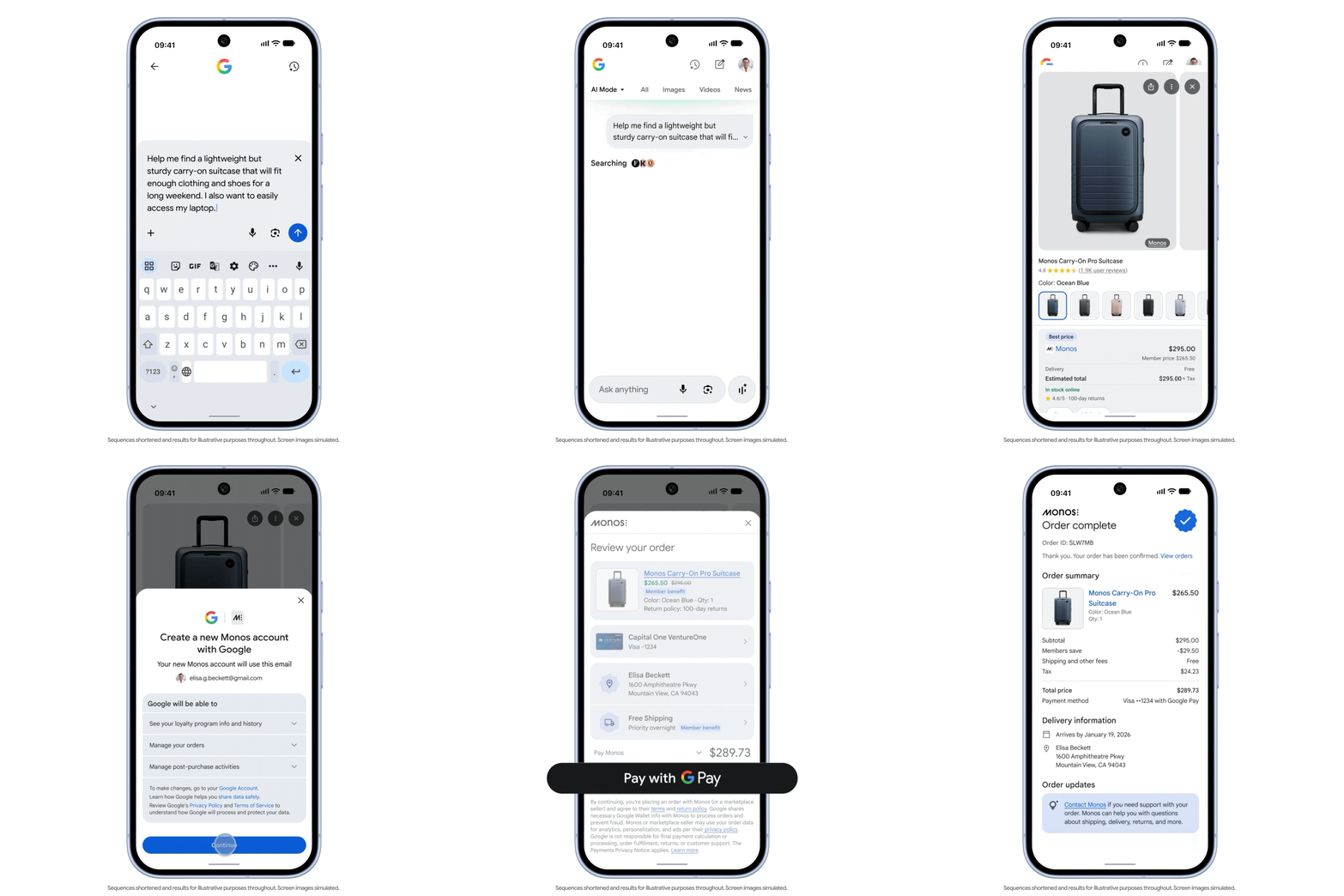
For years, the promise of AI in shopping felt tantalizingly close, yet always stopped short of the finish line. We’ve all experienced it: asking an AI assistant to find the perfect gift, compare prices, or curate a wardrobe, only to be handed a list of links. The final, crucial step “the purchase" always required leaving the AI and navigating a traditional website. That era is officially over. At the National Retail Federation (NRF) 2026 conference, Google, in collaboration with industry giants like Shopify, Walmart, and Target, unveiled the Universal Commerce Protocol (UCP). This isn't just another integration; it's a foundational shift, akin to the HTTP protocol for the web, but for commerce. UCP allows AI agents to not just understand your products, but to execute purchases directly on a user's behalf, without ever leaving the AI interface.
The Problem UCP Solves: Agentic Commerce Without Fragmentation
Imagine telling your AI assistant, "Buy that red sweater from Lululemon in a size medium, use my loyalty points, and ship it to my brother for his birthday." Before UCP, this was a fantasy. Every online store had its own unique checkout flow, its own API (if it had one), and its own way of handling discounts or shipping. AI agents would need a custom integration for every single merchant, an impossible task at scale. UCP changes this by providing a standardized language for AI agents to interact with any UCP-compliant shopping cart. It defines how agents discover a store, initiate a session, add items, apply discounts, provide shipping information, and finalize a purchase.
Why This is a Game-Changer for Merchants
- Zero-Friction Conversions: The biggest win. By eliminating the need for users to click away, log in, or re-enter details, UCP dramatically reduces checkout abandonment. The "buy" button is literally wherever the customer is interacting with the AI.
- Expanded Reach: Your products become accessible to a new generation of AI-powered shopping assistants, extending your sales channels far beyond traditional search and social media.
- Future-Proofing: This isn't a fad; it's the foundation of agentic commerce. Early adoption positions you at the forefront of this technological wave.
How UCP Works: The Technical Rundown
At its core, UCP is built on a few key components:
1. The .well-known/ucp Manifest File
Every UCP-compliant store must host a machine-readable JSON file at yourdomain.com/.well-known/ucp. This file acts as your store's "business card" for AI agents.
| Field | Type | Description | Example Value |
| ucpVersion | String | The version of the UCP protocol supported. | "1.0.0" |
| capabilities | Array | List of UCP primitives (e.g., shopping.checkout) your store supports. | ["dev.ucp.shopping.checkout"] |
| checkoutUrl | String | The base URL for your UCP REST API endpoints. | "https://api.yourdomain.com/ucp/checkout" |
| merchantName | String | Your store's human-readable name. | "My Awesome Store" |
| paymentHandlers | Array | Configurations for supported payment methods. | [{ "type": "googlePay" }] |
2. Standardized REST Endpoints
Your backend needs to expose three core REST endpoints that adhere to the UCP specification:
- Session Initialization: POST /ucp/checkout/sessions - Creates a new checkout session.
- Session Updates: PUT /ucp/checkout/sessions/{sessionId} - Allows agents to add/remove items, apply discounts, or update shipping.
- Session Completion: POST /ucp/checkout/sessions/{sessionId}/complete - Finalizes the order once all details are gathered.
3. Enhanced Product Data in Merchant Center
UCP relies heavily on accurate and enriched product feeds. Google Merchant Center now supports new attributes:
- native_commerce: A boolean to signal products eligible for AI-driven checkout.
- consumer_notice: For legal disclaimers or warnings (e.g., "Contains small parts").
- Real-time inventory via the InventoryCheck primitive to prevent agents from trying to purchase out-of-stock items.
Current Rollout: USA First, Global Soon
As of early 2026, UCP-powered native checkout is actively rolling out to eligible retailers in the United States. Major platforms like Shopify are among the first to integrate, making it a near-seamless experience for their merchants. Payment support currently centers around Google Wallet, with PayPal and other major providers expected to follow. International expansion is confirmed to follow "thereafter," with key partners in Europe and Asia already endorsing the protocol. While the consumer-facing features aren't live everywhere yet, the open-source protocol allows any developer globally to start building compliance today.
FAQ: Getting Your Store Ready for UCP
The Universal Commerce Protocol is not just a technological advancement; it's a fundamental shift in how consumers will discover and purchase products online. The future of shopping is here, and it's powered by AI agents. Are you ready for your share of this new frictionless economy?
About the Author: Wisam Abdulaziz