


The advertising platform structure feels very familiar to Google Ads users, with campaigns, ad groups, ads, products, conversion tracking, and bidding strategies already built into the platform.
One of the most interesting features is the ad group setup. Similar to Google Performance Max, advertisers can target using keywords or broader topics and let the AI optimize delivery and intent matching.
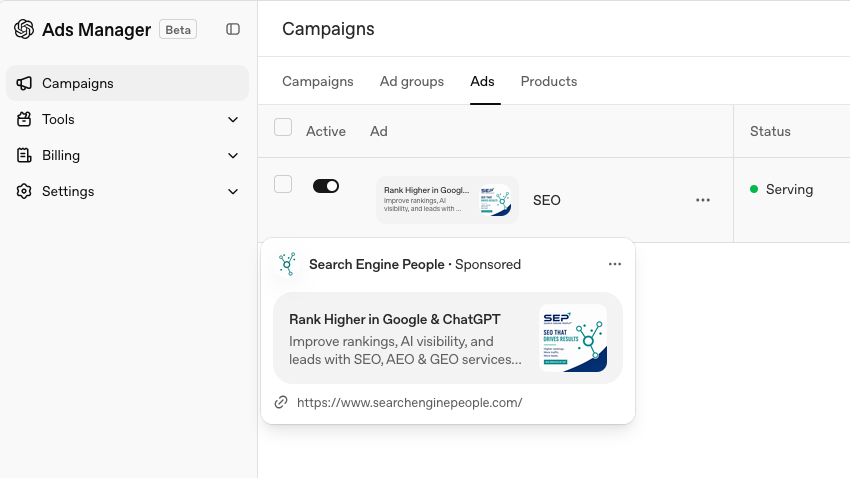
This is something we have been waiting for for a long time: a sophisticated AI-driven advertising platform that feels closer to Google Search and Local Services Ads than traditional display advertising.
In many ways, the setup is refreshingly simple:
Tell the platform about your business, define how much you are willing to pay for clicks or leads, install the pixel on your website, configure your conversion event/goal, and let the AI optimize the rest.
Current features include:
• Campaigns, ad groups, ads, and products
• Topic and keyword targeting
• Pixel and conversion event tracking
• Multiple bidding strategies
• CPC bidding with optional CPC caps
• AI-driven optimization
At this stage, reporting and campaign insights are still somewhat limited compared to mature advertising platforms. Current metrics mainly include:
• Impressions
• Clicks
• Spend
• CTR
• CPC
• Conversions
One major limitation today is that the actual prompts/search terms triggering ads are not yet available to advertisers. We expect the platform’s reporting and transparency features to evolve significantly over time.
We are still early in the evolution of AI advertising, but it is becoming increasingly clear that AI platforms are quickly developing into major advertising ecosystems alongside traditional search and social.
If you are interested in testing ChatGPT Ads for your business, contact SEP to learn more.
About the Author: Wisam Abdulaziz